


You know the feeling. A show you love gets renewed. Great news. Then… nothing. Eighteen months of silence before Season 3 finally shows up. It’s easy to read that as sluggishness. But there’s a more useful way to see it: streaming platforms are doing something patient, disciplined investors have known works for decades, waiting for the trend to confirm before committing real capital. And in today’s TV landscape, that wait is getting longer. Stranger Things is a pretty extreme example: viewers waited over three years between Season 4 and Season 5. At that point, you don’t need a recap. You need a refresher course.
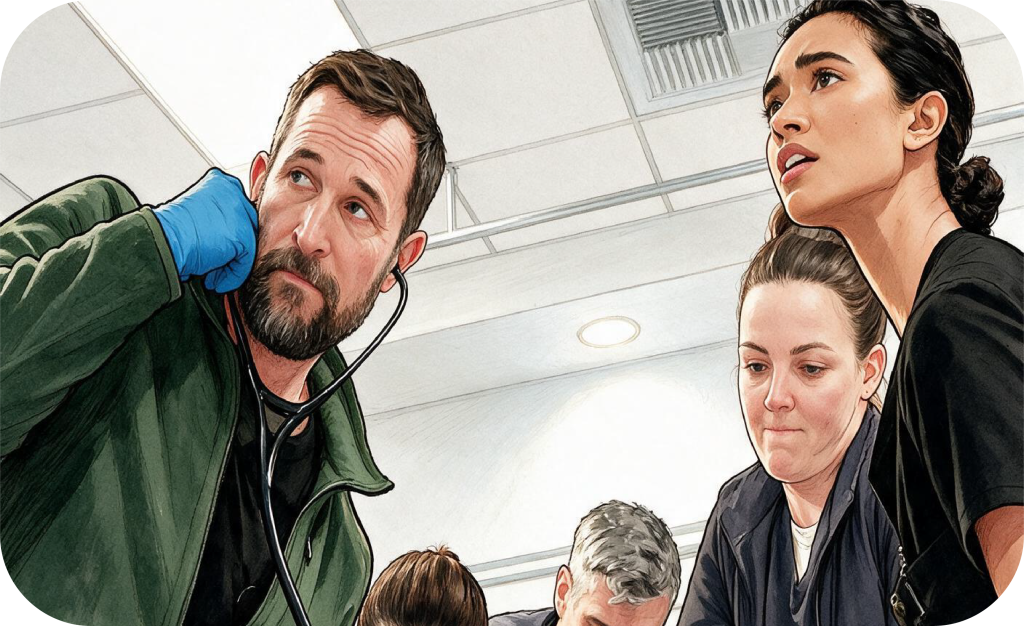
Meanwhile, a show like The Pitt has shown how quickly a series can build momentum when audiences and critics respond, and how that momentum can become a signal for further investment.
The Case for Waiting
Trend followers don’t try to predict the future. They don’t guess which stock will take off next week or pretend they have a crystal ball tucked under their Bloomberg terminal. Instead, they wait for a move to prove itself: sustained volume, a confirmed breakout, real follow-through, and only then commit. It’s a strategy built on humility. Nobody can consistently time the exact bottom or top, so instead of guessing, you let the market show its hand first. Streaming platforms are running the same playbook.
A show’s first season is the “signal.” Completion rates, rewatch numbers, binge patterns over several weeks, those are the confirmation. Only once that data holds up does a platform commit tens of millions of dollars to another season.
That’s not indecision. That’s risk management.
Nobody wants to swing hard on a show that spikes for a week and then disappears faster than a meme stock after the FinTwit crowd moves on. The Pitt is a useful example of what happens when the signal is strong. The show’s first season generated significant audience and critical momentum, giving its platform a reason to keep leaning into the trend. When the audience shows up, the reviews hold, and engagement persists, the case for another season becomes less of a prediction and more of a confirmation.
That’s the important distinction.
You’re not betting that the trend will continue. You’re responding to evidence that it already is.
Following the Trend, Not Fighting It
When one platform’s genre bet pays off — a prestige drama, a true-crime doc, a reality format — and others follow suit, that’s not necessarily mindless copying. It’s the same logic that makes trend following work in markets: don’t fight what’s clearly working. Lean into it. A rising trend attracting more capital — or more genre investment — is the market, or the audience, telling you something real. Ignoring that signal in the name of “independent thinking” is often how you miss real opportunity. There’s a reason nobody looks at a packed stadium and says, “Interesting. I think I’ll go watch the game nobody is attending.”
Momentum, in both worlds, is information.
Riding it isn’t lazy. It’s responsive.
Patience as a Feature, Not a Bug
The tools that create this lag, viewing-data cycles for streaming, moving averages and confirmed breakouts for trend followers, exist because acting too early is expensive. A trend follower who jumps in on every wiggle gets whipsawed and bleeds capital on false signals. It’s basically the financial equivalent of changing lanes every 30 seconds because you think the other lane is moving faster. A streaming platform that greenlights Season 2 on a hot opening weekend risks committing a production budget to a show that doesn’t actually have staying power.
Waiting for confirmation costs you the first move. That’s the catch. You won’t be the first investor through the door. You also won’t be making a giant bet based on one exciting Tuesday. It also protects you from a lot of moves that were never real to begin with.
That trade-off is the whole point of the strategy, in both industries.
The Old Cadence vs. The New One
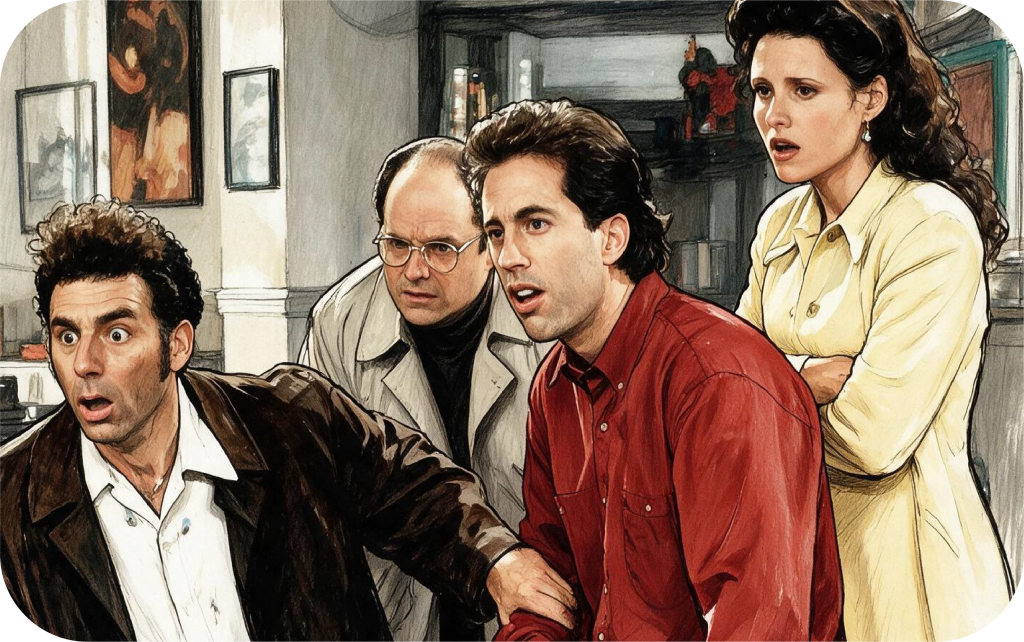
There’s another layer here worth pulling apart. Network TV used to run on a completely different rhythm: a season meant 22 to 25 episodes, delivered every single year, like clockwork. You didn’t wait to see if the show “confirmed” itself. The network committed to a full season up front, sight mostly unseen, and let the show find its audience over dozens of episodes in real time.
Trend following flips that model on its head, and streaming did the exact same flip to television. Instead of one big, full-conviction bet made up front, trend followers scale in gradually: a smaller initial position, then more added only once the move proves itself.
Streaming took the same flip and applied it to episode counts.
A “season” shrank from 22–25 episodes to 8–10, and the once-a-year release turned into a wait of two years or more. Less content per cycle, but each batch is a smaller, more calculated commitment rather than one large speculative swing. It’s a trade-off. You get less content per cycle, but each commitment is more calculated. Just like a trend follower who’d rather make four smaller, well-timed trades than one big bet on a hunch, streaming platforms are choosing fewer episodes per decision point in exchange for more data between each one.
In other words, Netflix basically discovered position sizing.
Where the Analogy Has Limits
Worth noting: markets confirm trends in milliseconds; TV doesn’t.
A show needs writers, actors, sets, and months of production time. No amount of sophisticated viewing data is going to convince an actor to film eight episodes overnight. Some of streaming’s timeline is simply the physical reality of making television, not a deliberate “waiting for confirmation” choice. Still, the instinct behind the wait, don’t overcommit before the signal is real, holds either way. Markets and television have more in common than they probably should when it comes to capital allocation.
The Takeaway
Trend following gets a reputation for being reactive or unglamorous, chasing what’s already happened instead of calling the next big thing. But there’s real discipline in trading the thrill of being early for the confidence that comes with confirmation. Streaming platforms are playing the same long game: betting on confirmed audiences over guesswork and letting the data, not the hype, decide what gets a second act.
Of course, shows don’t run forever, and neither do trends. But we’d bet the slow build and gradual confirmation behind today’s biggest shows are here to stay.