
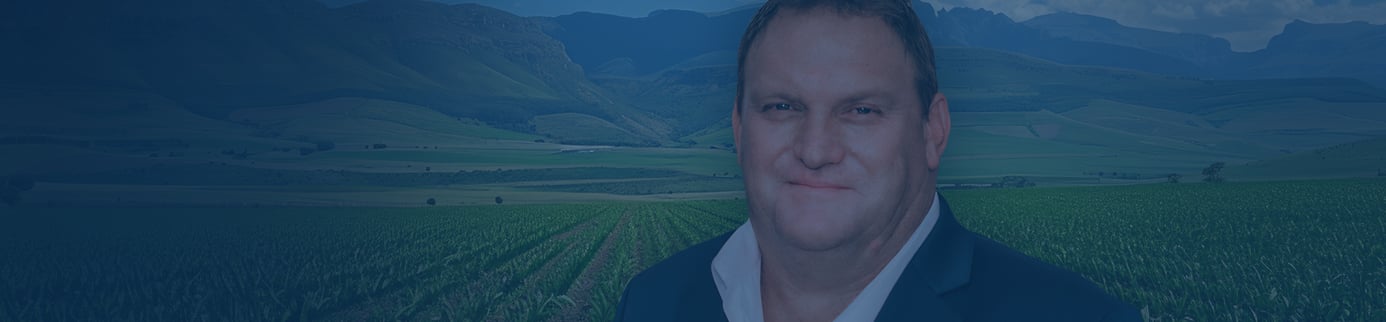
In this episode of The Derivative, host Jeff Malec talks with South African grain spread trader Bruce Sinclair (Brent Trading) about how he went from a farming background to running a spread-focused commodities program trading Chicago grains from a remote game farm in South Africa. Bruce explains, in plain language, how carry and calendar spreads work, why he believes spreads offer a more manageable risk profile than outright futures, and how he enforces a hard 10% annual drawdown limit for investors. They dig into the realities of global grain markets with Brazil, Argentina, China, and geopolitics in the mix, why commodities aren’t the clean inflation hedge many think they are, and how climate and structural changes are reshaping seasonality. Bruce also shares stories from his off-grid life breeding rhinos and rare game, navigating South African politics and crime, and why he thinks 2026 could bring much more volatility to grain markets than 2025… SEND IT!
______________________________________


______________________________________
Check out the complete Transcript from this week’s podcast below:
Carry, Calendar Spreads, and Climate: Bruce Sinclair on the Future of Grain Markets
Jeff Malec 00:52
Everybody, we’re here with Bruce Sinclair, Bruce, how are you?
Bruce Sinclair 00:55
I’m good, good. Jeff, thanks. Thanks very well.
Jeff Malec 01:00
You’re in South Africa. Whereabouts? Are you in South Africa?
Bruce Sinclair 01:04
Well, myself, I’m about 300 kilometers north of Johannesburg, but our office is 100 kilometers south of Johannesburg, so we’re up in the in the northern part of South Africa. We’re not in the in the lush area Cape Town or in the Garden Route down there? Yeah, we’re pretty much so
Jeff Malec 01:23
you got to be close. How much further north does it go? That’s got to be about to the border, right? Yeah.
Bruce Sinclair 01:29
Well, further north, probably about another 300 kilometers, but to the west, probably 80 No, it’s eight o’clock, kilometers to the to the to Gaborone, which is the, obviously, the capital of Botswana. So we’re about three kilometers from the actual border. That’s where I’m sitting. And, yeah, it’s a little bit of a quiet place, easier to work from here. Kids are out of school, so I don’t have to rush to school and those kinds of things. So time to do what I actually want to do.
Jeff Malec 01:59
Um, and do you ever have to use that compound bow on the wall back there?
Bruce Sinclair 02:05
It’s actually, I mean to use it. I bought it, but now it’s become a decoration because I didn’t have anywhere else to put it. But to tell you the truth, I haven’t been able to shoot anything with it, at least not accurately, so, but I’ll, it takes a lot of time. It takes a lot of time so, but I’ll get around to that.
Jeff Malec 02:25
I had an embarrassing story. I was down in Florida visiting an old high school friend. Her son was practicing with one of those. And I’m like, let me give it a try. I could barely get it back, and then I hit the trigger accidentally and punch myself in the face, get myself a bloody lit so I’m like, oh, it’s tougher. And it
Bruce Sinclair 02:40
looks Yeah, it can be pretty treacherous. I’ve seen a couple of guys hurt themselves, yeah, so I set the tension right down so it’s just easy to do it, and that’s probably why I’m not getting anything targeted, probably the arrows falling on the ground before the time. But yeah, at least it’s a good way to spend time.
Jeff Malec 02:59
Love it. So are you born and raised South Africa? You’ve been there the whole time?
Bruce Sinclair 03:03
Yeah, yeah, I was born and raised in South Africa. My dad was a farmer. He’s been most of his life a breeding, a stud, cement Toller breed, which is a cattle breed, oh, and yeah, went on to varsity from school, went into agriculture, did a basic BS degree in agriculture, and went on to commodities and did honors in animal feeds components. So that’s pretty clear where my background or my experience comes to. You know, these markets spent a good time in the Department of Agriculture, doing a bit of advisory services. And the government now, yeah, with the government when, when it was little functioning. And after that, yeah, started, they started trading commodities on the Johannesburg stock exchange. And yeah, I’ve been involved in that since that started. And yeah, we were trading electronic, obviously, long before Chicago was so we do, we do figure ourselves that we’re ahead of the market, which we’re probably not.
Jeff Malec 04:15
What is the agriculture in South Africa? Look like? You get mostly cattle.
Bruce Sinclair 04:20
There’s no the problem. Yeah, the grains are the biggest. We’ll have white maize, yellow maize, and wheats and sunflower also are a big market for us. That white maize, or white corn is probably our biggest market, because it’s not traded on any other exchange. So this gives us ample opportunities to look at divergences between white and yellow maize. That’s our background. That’s where we started. And probably that’s our strength, looking into specifically the corns, or the white mazes, as we call it, locally, and looking into the carry of that fact, because we had to grow into that market, you know, we didn’t know. Anybody in the financial markets. When we started out, we had to take this agricultural markets and put them on the board and start working them as financial instruments. So you’re saying, yeah, yeah, as a whole farming community. So luckily, I was, while I was working at the Department of Agriculture, I started trading futures, on indexes and on the South African exchange. And when they started adding agriculture approach, it was quite easy just to move over to that sector, because there was a real vacuum. So then I started working for one of the grain merchants in the country, and we did a lot of sourcing, mostly on the on the supply side, and yeah, we delivered that to most of the processes, or factories or silos, or where is it?
Jeff Malec 05:46
Is it staying in South Africa? Is it going throughout Africa? Is it mainland?
Bruce Sinclair 05:50
Yeah, yeah. Well, 80% is local usage. But we’ll have export to all the northern countries from of South Africa, plus we have a couple of inland countries. We’ve got places like Lesotho that Trump doesn’t know about, and places like Swaziland, which is a country within our country. But, yeah, it’s been there. So we’ll even if we, if we, if we supply them. It’s reckoned as an export, yet it’s mostly let’s, let’s rather call itself Southern Africa supply. We don’t really supply, really, you know, internationally, you know, we don’t supply to Russia or to the European Union, or to, you know, to, obviously or not Argentina in Brazil. So we’re mostly consumers of our products,
Jeff Malec 06:41
and then what, what did those new futures market so like, like, in terms of comparing it with the Board of Trade at the time, like a 10th a 100th of the size,
Bruce Sinclair 06:51
ah, yeah, cheaper is at the bottom. It’s probably less than 100 to do the calculation on that. But we trade like, on a good day, we’ll trade 5000 contracts, which would probably be, yeah, let’s say 5000 contracts, which is 50,000 tons, yeah.
Jeff Malec 07:13
I think I just pulled it up actually, the yesterday CME corn was 500,000 contract. Yeah. So, so that’s a trick in of itself.
Bruce Sinclair 07:23
It’ll been a very good day. Yeah, yeah. Luckily, the market players are also less so we have less competition than obviously, on Chicago Board of Trade. But we did get into the to the practice of finding out how the spread functionality actually works between, you know, contracts, specifically the carry and the backwardation. So I’ve been in that market since around about 2000 actually, when I started working for one of the grain merchants. So and eventually went on to start this company in 2002 so we’ve been really just been doing this from 2002 and we were just focusing on spreads, not taking a market outright view. I think trading the futures is obviously very volatile, and the spreads just takes the edge out of the market for you. It just brings it back to a little bit more of a homely sort of position where you can actually manage a position. So we went to spread quite early in our, let’s say, in our history of the company, and found that that’s where we’re we were good at, and that’s where we we’ve been. We’ve been running since then, and well, you know the futures markets, you know it can be hectic and you’ll really have to do well if you’re going to survive in the futures market. So, but we’ve been there since 2002 and I think that’s just because we’re not doing futures or price speculation.
Jeff Malec 08:56
Somebody needed to tell all the people trading silver futures last week down 33% in a debt.
Bruce Sinclair 09:05
Yeah, yeah. Welcome. It’s like, obviously, it’s like, Bitcoin. You know, guys trade Bitcoin. But I wonder if anybody’s ever seen one, you know, this is, this is kind of difficult for me to to grasp coming from, and then you’re in the agricultural sector, and obviously, this is what I like, is actually to, you know, go out into the lands and see, see how the crop is doing, when’s, you know, the time for planting, when, when the product is getting to a critical stage where it’s sensitive to weather and sort of thing. It gives you a real feel of the product you’re trading. I mean, I still don’t really understand Bitcoin. What’s the difference between Bitcoin and black tulips before an instance, don’t know what’s the difference. Everybody’s got a hype on Bitcoins, because it’s it could be and something it could not be.
Jeff Malec 09:55
So I think bitcoins just if you’re, you know, you’re delayed at the airport. And you don’t have any poker chips, and you, like, tear up a piece of paper and divot up amongst your friends and type poker for the pieces of paper. It’s just for trading firms and traders to trade something, right? It’s just little pieces of paper they can trade.
Bruce Sinclair 10:14
Well, I know lots of guys that have made good money on it, but, yeah, they’ll only tell you when they’ve made money. They won’t tell you when they’ve lost it.
Jeff Malec 10:21
Exactly, obviously. Yeah. And do you, are you actually going out in the fields and, like you said, like, as that time comes and it’s susceptible to the weather, are you actually going on crop tours and saying-
Bruce Sinclair 10:34
Yeah, we do Jeff, yes, but obviously locally. So I don’t do the Chicago tour or the US tour, because obviously it’s just too big. Even the guys that do the analysis, you know, they don’t get around everything. So I do, you know, looking at their reports, and obviously I am a little bit worried that, you know, you can’t get a good whole picture, because any farmer in any state or any land that you if you speak to you’ll tell you the crop is is under stress, and they’re probably not going to get the high yield. If a farmer is telling you is getting a massive yield in this is looking good, you know, he might be on something. You know, it’s just not their
Jeff Malec 11:12
Usually about the craft, but they’re optimists about the price,
Bruce Sinclair 11:17
Obviously, yeah, well, yeah, you can’t say they’re pessimists, because obviously, are they planting when it doesn’t rain? Yeah, and they obviously praying for the rain, which is, it’s difficult for a producer to short a market. It’s really rare for a producer who’s thinking about speculating, for him to sell the market. It’s very difficult for them to get square just to sell what they have, because they will is always going to hold back something. And that’s just the nature of, obviously, of how they work with this product. And they they producing it, and they obviously want to get the best for it, but, and it’s just just like psychology behind that is just to, you know, hold on to the product.
Jeff Malec 11:58
Yeah, in our ag unit, we’ll see a lot of groups hedge, but then they’ll buy it back on the board and that like, they can’t, as you’re saying, they can’t stay even they want to re own it, yeah, yeah, yeah, you were successful in your hedge, and then the price came down, and they’re like, well, now I should buy a good
Bruce Sinclair 12:14
yeah, no. Well, yeah, I would love to see how many producers are actually speculators. And as far as positions concerned, know that to be like, really eye opening and but I think the producers are a really large percentage of the speculators in the market,
Jeff Malec 12:32
For sure. We call it hedgulating Here. Instead of speculating, they’re hedgulating. I’m just gonna
Bruce Sinclair 12:39
say, you know that crowd.
Jeff Malec 12:41
It’s a big crowd, for sure.
Jeff Malec 12:52
So take me back so you got into the spreads, but you weren’t spreading your white maze versus us, clone futures. You were doing like, calendar spread us, yeah, I
Bruce Sinclair 13:03
think to or both, yeah. Well, it was sort of progressive that to start we were, like, just doing white maze, calendar spreads, you know, buying in the carry spread. And, you know, just holding it, when it, when they were showing some carry. And we found that there, you can actually get paid for patients because you’re buying a carry spread, you’re long the nearby month, you’ve hedged it, and if anything happens down the line in that period, obviously the front month will, will arise, and then you can actually sell it for a profit, and that’s with a sort of A low risk approach.
Jeff Malec 13:40
And talk through that, right? People hear the carry trade and think they’re buying, selling yen and buying dollar, whatever, like they think of it in currency terms. So talk through what you mean exactly by the carry trade in that in the grain space, okay, all right, sure,
Bruce Sinclair 13:54
we’re not. When I’m saying buying the carry trade, I mean you’re buying the product. If you’re buying physical stock or the future is, well, obviously it doesn’t make that much difference, but you’re buying the current or the nearby months, and you’re selling that forward, three or four months later, selling it as a hedge. So you’ve actually a hedge, but you’re holding the nearby contract. So what you’re hoping for is, obviously for market to go from a sort of carry, which is presenting it is paying you a carry so it’s paying you to carry this product for six months. So obviously, we’re hoping for some volatility, and that there will be a short supply on the near side, be a bit of a short term rising in on the nearby market. So that’s typically a safe trade in our books, and it’s worked most of the time, except 2025 has been very challenging, as far as that’s concerned, with the tariff wars. But obviously it will change even one of those strategies. If it hasn’t worked for one or two years, it doesn’t mean it’s not going to work next year. The probably the chances that that specific seasonal spread will work the next season is. Probably just going to give it going to increase.
Jeff Malec 15:03
And is, is that based mainly on rates or storage capacity, or what’s, what’s that? Because you’re basically
Bruce Sinclair 15:09
saying the bad cost to carry it. Well, well this say, if you are, if you, if you were to buy that product and put it into silo and you actually own it, you would have to be paying for the product, so you will have an interest cost that you’re carrying and the storage costs, because the elevator will charge you storage. So you always say, look into the forward market. When the use carry that their prices will be increasing going into to the further months to actually pay you for storage. So if I have the product now, I could sell it for x, but I could say, sell it later for x plus something. And that plus something is obviously something to to pay me for the carry charges. And it normally doesn’t pay you everything it costs you, but it does give you this great advantage that you’re just holding the product futures market. You’ve got relatively low risk, and you’re just holding the product, and you’ve really just got large upside, yeah, a little bit of an option trade. Then, yeah, no, let’s not say that word. But yeah, it gives you, you’ve got a sort of a limited loss, creating a calendar spread. And that’s what they do. They give you sort of back door, and if a calendar spread sometimes goes against you, let’s say you’ve bought it at typically, Chicago works on on a negative number. So let’s say we bought the spread at a minus 20, and it moves to minus 25 it’s actually getting to a better position for new entries. So they always say, don’t double up. But in the case of spreads and carries, you’re actually getting to a lower risk the more the market goes against you. And at some point the big financial institutions will get involved in there, because they might be able to buy a product and actually sell it as a profit in the future. So yeah, like under instant or kind of thing, yeah, yeah, but that’s only if you know, the world is stable and there’s major upsets, because, I mean, it still is a future market. And even though we do these calculations, things can get really, you know, hectic,
Jeff Malec 17:17
yeah, and talk through that for a second, because right spreads are notorious, and the US, at least for natural gas, it’s a big one, right, like amaranth meant thus, because they were the seasonal trade worked forever until it blew out one year, huge and took down some firms. So that seems like the spreads are always less volatile until they aren’t. So how do you protect against that? Or how do you, how do you view that?
Bruce Sinclair 17:43
Well, this, this, this, there’s two, two sides to that story, the first one being that, if it did blow up and it went against it, that means it could have and natural gas is difficult, because we only have this full carry sort of thing, but in the grains you do have. So if you’re buying a carry, you’re as long as you can actually hold that product and carry it forward you want. It will never blow down under. Carry. You always have something going carry, shooting up. So if you’re going to short a carry, let’s say for markets, way into backwardation, obviously there, what I’m saying is where the spot month is a lot higher than the further months. If you’re shorting that thing and you’re selling the spot months and hoping that this thing is going to go to carry which it, like always does. And the same be true for the weeds in for the wheat situation, except when the Ukraine war camp, the July deck on the wheats always moved from zero to a minus wing to a carry, except the year when Ukraine was invaded and it just went ballistic. But it went to ballistic if you were short in the carry. So as far as carry is concerned, we always like to be a buyer or a carry that’s sort of our back door, you know,
Jeff Malec 19:04
but so that even the people maybe getting trouble selling,
Bruce Sinclair 19:09
yeah, yeah, Jeff, yeah, you could do big volumes expecting that, you know, this thing is going to not go further and then obviously it blow up, that that’s what obviously will hurt you. And we were short on the on the wheat spreads, expecting them to go to carry and when the Ukraine invasion happened. And fortunately, we’ve got a bit of a strict protocol as far as our risks are concerned, that when we hit sort of a level, and our program is designed to take a 10% knock and nothing more, when we when that it hit 6% and it was actually looking like it’s going to be a, it’s even a better trade, or it’s a, you know, you could actually get in again, because this thing has got to go to carry Fortunately, our stops threw us out. So we just cleared everything. We got out. There we went that month. In with a loss that we weren’t out. And so obviously, what I’m saying doesn’t matter how much you think you know of the market you need. You need a big mama there to step in when you’re over your limits. Yeah.
Jeff Malec 20:13
And you guys kind of have a risk first approach, right? Like, speak a little bit more about that. So you have the that stop position. Yeah, what else?
Bruce Sinclair 20:24
Yeah, we have to have a stop loss in and we’ll calculate the risk that the that the program can take, and we’ll divide that up to between the commodities that we’re actually trading. So let’s say we’ve in the grain spread. We’ve got two programs, one is the grain spread, and one is diversified. That includes grains, but it includes softs and meats and some energy products as well. But in the grains program, typically we’ll only take we have total risk of 10% okay, that that we never want to override. So we’ll break that risk down to 2% per commodity and then we’ll look at the strategies and make sure. Let’s say, if we’ve got two strategies running, we’ll only have exposure of 1% per strategy, so that will be our entry. So yeah, a very defensive sort of approach to the risk. We’re not just going to do this program keep going until it doesn’t work anymore. We’ve got this program that’s working for us now, but we need the risk controls to, obviously, to develop it and to be able to get into the market at the right spot. So we like to think that’s the way we protect ourselves and our clients. And yes, it’s been successful in the past.
Jeff Malec 21:37
Is that base per month, so if you hit that 10% level on each trend,
Bruce Sinclair 21:44
yeah, no, no, 10% on the portfolio, total portfolio, yeah, at any Oh, no, that’s on a year performance base. So at any time that the program is down 10% it should be closed out completely, the whole program
Jeff Malec 21:59
the rest of the year, or you’ll start getting back until
Bruce Sinclair 22:03
we can go and sit down and figure out what the you know, what the problem was. Can we correct that? But I’m approaching this from an investor’s side. I’m saying, you know, if I give this money to brain trading to invest in this program. What? What am I looking at as lost as a client? And then I want to say to you, listen, if you invest as us, you’ve got to be able to take a 10% drawdown at any time during the year. And that’s, that’s the risk I’d like you to look at, you know, if you can, you don’t, don’t, you know, I’ve got friends. I’m sure you’ve got friends like that, Jeff, too, like come to the market and they say, Well, Jeff, you know, you know about the market. Yes, you know, five grand. Can you invest it for me? And you’ll say, how much risk can you take? So no, I don’t want to take any risk, but I want to make a lot of money. That’s everywhere. So this exact same principle applies. If you want to take a 10% we’re saying to you, we’re taking a 10% risk. If you prepare to take a 20% risk, you’ll have to do that on a notional fund sort of way, yeah, which we can do. So, you
Jeff Malec 23:11
know, I’ve always had an issue where people say, Oh, I have this 2% stop loss. But then they’ll exit the trade, and then they get into the they re enter the trade the next day, where it now has another 2% max loss. If that stops out, they enter it. So I’m like, Well, you don’t really have a max S. You’re just getting out and putting it back up. So you’re saying, No, we’re actually stepping aside for a bit and reassessing like you won’t get into that same trade.
Bruce Sinclair 23:37
Well, no, no, we want to. We don’t want the yearly performance to be a minus 10 at the end, or anything bigger than that. So we’ve been able to do that since inception. We’ve never been able to we’ve never been down 10% or more or it basically any time in that program on a monthly basis. So, and that’s our intention. That’s why I say, from my money, I wanted maintenance like that. You know, I don’t want to just based in a program, say these guys say they can make your assets grow without, yeah, constraints. I want to, want to be clear. That’s what we’re looking at. You
Jeff Malec 24:30
and do you try to be right if you get investors coming to you like, oh, I want this commodity exposure. I’m worried about inflation, I’m worried about this and that, and you’re saying, Okay, we do commodities, but it’s not necessarily giving you an inflation bench. Like, how do you view that people thinking they want to buy and hold commodities versus what you do and those different kinds of exposure?
Bruce Sinclair 24:50
Yeah, well, probably our first I’m going to say that doesn’t work to hold it for inflation.
Jeff Malec 24:58
All right, let’s talk more about that. Why not?
Bruce Sinclair 25:02
Well, yeah, let’s just talk quickly about that. If you take the Bloomberg index of commodities, or the grain prices as a whole, and you take it over the long term and you adjust it for inflation, you’re probably going to see you’re just flat. So it is true that you might be able to hedge yourself against inflation by just holding these commodities. But commodities have, you know, they’ve got a downside and a top side, and between that, they’re going to move. Typically, you would be, you know, when it drops, when you’ve got an oversupply and when you’ve got a good demand, it’s going to go to the, you know, to the higher, high side. And those, it’s not that they’re hard limits. They’re sort of soft limits. The market’s going to worm its way between that. So you might be getting in one year expecting yourself to be covered for inflation and actually have a negative figure going forward. I’m not convinced that there’s any figures to really say that it’s worthwhile investing in soft and agriculture and commodities specifically to offset inflation. The thing about commodities and is we don’t have an alpha for performance. You know, we’ve got no like, can your program do bigger than the than average price of corn, or the index price or not? We don’t have that. We’ve only got supply and demand. And when there’s supply, prices will go to the bottom, obviously, and when does demand will go to the roof. That button and roof are sort of soft tops, because the moment the price goes too high, China is going to buy from Brazil. That’s the way they they’re doing. And at the moment it goes too low, you know, people are going to stop producing it.
Jeff Malec 26:36
So saying in the US that the cure for high prices is high prices. They’ll figure something else out. They won’t pay
Bruce Sinclair 26:42
I think, no, I think it’s the other way around. The cure for lower prices, I’m not so sure about the eyesight, because, I mean, some farmers will definitely always plant. I mean, this is their way of life, and then they produce it, and they probably use their grain. But when it comes to business, let’s say agricultural businesses. Obviously, they can. They do this all the time. Is it, you know, are we going to plant maize? Are we going to plant corn, or are we going to, you know, do some sunflowers, or do something else, ways, and that will just make the if the prices go down, and they keep going down, I mean, if the corn prices keep dropping, the US farmers are not going to plant the corn. That’s, you know, it’s just ridiculous. So that’s, that’s the way it works,
Jeff Malec 27:30
subsidizing to plant the corn. That’s another scare.
Bruce Sinclair 27:33
Yeah, yeah, yeah. I hope so. I hope so.
Jeff Malec 27:38
I’ll finish on your commodity inflation point, I think that all came out of the 70s, huge inflation, with the oil spike and the Bloomberg commodity index, everything was like, 50, 60% oil all those commodity indices. So everyone’s like, look, commodities do great during inflation. This is how we cover it. But to your point, unless you just want to have huge oil exposure, which doesn’t always work. No, well, to say it lately, yeah,
Bruce Sinclair 28:05
since I’ve been in the market to now, I think about 1012, years ago, I was on an interview, and the guys asked me, you know, where you think the crew wealth price is going to be, and at that stage, it was $100 and I said, Well, it’s just going to keep rising, because it’s a, it’s a non renewable product, and, yeah, it’s been painful to watch, so but, yeah, but in the grains, in our grain program, obviously, that’s where I’m saying that. You know, the inflation effect is, it’s probably not as great just to buy and hold them. You’ve got to manage that position. Since we’re moving between oversupply and demand, you’ve got these this is fluctuations, and that’s why I like the market, because it can’t rocket up and keep going up, and it can’t come down and keep falling down. It’s got to stay within those sort of soft limits. And as most commodities would better, but I think the grain markets, you know, you can actually, you can calculate where they are, or at least we can do that for the markets that we trade.
Jeff Malec 29:11
And tell me again, the market. So in that ag program is which, which grains?
Bruce Sinclair 29:16
Well, in the ag program, we’ve just got us commodities. And in the diversified, no, I’m not in the diversified, we do some sugars on European sugars futures, and we are looking what, what else we can add there. But it’s a little bit more diverse. But the grains program is just Chicago grains. It will be the three wheat classes, the soya beans, the soybean meal and the soybean well, and corn,
Jeff Malec 29:44
and talk a bit about soybeans, I always could call it like the most popular market that nobody outside of commodities knows about, right? Like, I think if you went up to the average person on the street and was like, What is this? They’d be like, edamame. Maybe it had it at sushi restaurant. It’s. Correctly. Don’t know soybeans, but in our world, it’s like, right, a main product. So, yeah, I don’t know if there’s a question there, but tell me, in your world, right, soybeans is a main product, right?
Bruce Sinclair 30:13
Yeah, it’s a big product, and it’s a, it’s a, it’s a product that really can do very well because it’s, it’s highly liquid, and it’s a product that’s high in demand globally, so this will always make it relevant. So we like it. We like the liquidity that it has and the fact that it’s got a fixed sort of storage. The International picture of the soybeans is getting a little bit complicated. Well, I would say complicated. It’s getting a little bit more busy with Brazil coming onto the market. Well, they throw in the market. Argentina is there. So this is, this is creating some competition, I think, for for us, which is always had a large amount of soybeans to export, but it’s actually here in Illinois. It’s a volatile product. And I think if I’m saying volatile, I don’t mean it’s totally crazy, but it moves. The corn market is like, very sluggish, and the wheat market is like sluggish as well. So the soybean adds a nice sort of mix to it, you know, and it gives opportunities on the spreads that you can trade.
Jeff Malec 31:18
And top was it last year or two, like the meal was way. Nobody wanted the meal, but there was a ton of demand for the oil. Was there some what was happening there? Did I get that right?
Bruce Sinclair 31:29
I’m not. I’m not sure exactly which they were looking for, but the, what we call the crack spread, is that to actually where you’re looking to buy the beans, and then you’re selling the meal, and well, that’s at pretty historic levels. It is a big incentive for for process to crush soybeans and sell the meal and sell the soy well, so that that won’t last forever, because, as it’s an incentive at a time they will, the guys will be processing more, and they’ll start paying more for beans, and it’ll pick the beans price up. So there’s a sort of interesting three dimensional dynamic there, which creates a lot of opportunities, because you can do backwardation on soybeans versus the backwardation on soy meal, for instance. And this is, this is just giving a little bit more, sorry, a little bit more toys to play with and instruments that you can actually go and analyze. So and analyze the US. Got lots of statistics. I mean, there’s the so many statistics available that you can really do some good homework, and, you know, get some good statistics out of it, and you can actually present the case for that.
Jeff Malec 32:36
And did you ever mess around? You don’t do any cross like oil versus meal. There’s oil, we do?
Bruce Sinclair 32:42
We do, no, yes, we will. Sometimes we will. If there’s good, good an opportunity, we’ll have a look at that. But we sort of look at the trades, obviously, continuously. But we’ve sort of got a change, a trade generation, where we’ve got lots of inputs of trades that are coming that will break down and have a look, and then we’ll see how much money we’ve got to invest, and how can we disperse that between this risk and that? And it’s always nice to have something else, like soybean versus corn ratio that might be, might be able to add some value. You
Jeff Malec 33:26
so you’re looking at Brazil, China, America, like, how do you do all that? From your seat in South Africa? Is that hard you think? Right? One, you just have this huge time difference. But two, do you think it’s, could you have done this 10 years ago? Or do you think the internet and all the information today?
Bruce Sinclair 33:46
Yeah, absolutely, absolutely not. No, we couldn’t have done it. Chicago Board of Trade didn’t go electronic. We would have never been able to do it. I would have to move to the US Vote. Vote there and sort of, you know, set up the business there.
Jeff Malec 34:00
Would. Could you handle the Chicago winter? You think the Chicago the Chicago winter?
Bruce Sinclair 34:06
No, definitely not. No, no. It’s it was like
Jeff Malec 34:10
negative 20 Celsius here two weeks ago.
Bruce Sinclair 34:13
I can’t believe people can actually live there, really. I can’t believe it, but it helps me to be here. And if I’m if I’m looking at the sort of the bigger picture, because this is normally what happens when you’re day trading. You’re so focused on the small picture of prices moving up and down that you get in and out, and eventually you either you either lose or you break even. There’s not many guys that that will, you know, make money on speculating their day trades. But when you look a little bit further from the screen, if you look in from South Africa, and you’re looking to the US, and you’re looking at the whole of it, and you’re looking at the weather patterns, I’m not looking for something specific. I’m looking for the global effects that are that are taking place, and the same with the supply and demand. So it’s easier for me to sit far. Way from a market, and to be able to look at it gives me sort of a big picture. I like to think I can see the horizon better than what I were if I was a farmer in, well, anywhere in the US planting and it’s minus 20 degrees, how can you have a positive a positive feeling about your crop if it’s minus 20, I don’t know how that’s possible, you know, yeah.
Jeff Malec 35:25
And it seemed like you get rid of all the biases too, right? Like you don’t have the US farming, yeah, this Argentinian this,
Bruce Sinclair 35:33
yeah, there’s a lot of noise. There’s a lot of noise, obviously, coming out of the agricultural markets from various sides so, and obviously one of them being the weather. So, like, we’ve just mentioned that it’s minus 20 or it doesn’t rain. It’s kind of difficult to take up a market position against your current, current weather. But yeah, being young, I can filter out, like, I suppose I could filter out, if I remember, was the US as well. But just to take away the noise, focus, find out what’s important to you, get that data, get it updated, and make your decisions from that. Because, yeah, there’s obviously too much noise, and too has too much biasness that you actually pick up yourself.
Jeff Malec 36:13
Where do you see the most noise these days? Like, what do you find yourself discounting more than?
Bruce Sinclair 36:19
Wow, absolutely. The politics. The politics is obviously Uranus. So I you try to try to not listen to the politics, but it obviously it’s affecting our markets. And with it didn’t do that before. So this is really, really been challenging. Actually, the last while,
Jeff Malec 36:39
have you heard we call it the taco trade? Trump always chickens out, T, A, C, O,
Bruce Sinclair 36:44
okay, well, it sounds, sounds like that’s going to realize today,
Jeff Malec 36:51
but people have been trading that, right? It makes a big move on an announcement, and they take the other side of it, and after a few weeks, it gets unraveled, and it’s been a good trade.
Bruce Sinclair 37:00
I can’t understand why people don’t understand Trump. Because I really, I think I understand. He makes a big noise, like you say, makes a big noise. Everybody sits up straight and gets scared, and he comes in and makes a deal. Well, it sounds like a good strategy from there, from that point of view.
Jeff Malec 37:15
So that’s good. And what about the Chinese part? Like, you think they are playing chess when we’re all playing checkers, like, are they just manipulating this? And they come out, like you said earlier, they’ll just, if price gets too high, they’ll switch, or they’ll change their buying patterns. You think they’re cleaning the market also like manipulating that? Or no, yeah,
Bruce Sinclair 37:35
Jeff, that’s a difficult question. I just know there’s not much to know, not much info to get from them, but the info coming from China is limited, and it’s not credible. So that’s probably one of the noises I try to ignore, because if you’re going to try and figure out what’s happening there, they seem to stick to fundamental moves or fundamental things that change, but I don’t want to risk something on that. It’s just that’s just too unpredictable for me.
Jeff Malec 38:02
Do you look at their futures markets, at their prices there?
Bruce Sinclair 38:06
Yes, I did look at their futures market, but yeah, it’s well, except the fact that the NFA, I think, has got a crackdown on there. You can’t trade it. You might look at it. We can’t trade it, I suppose. But just on that, let me just it’s not, I’m not alone in the business, and I’m not looking at, you know, there’s noise and stuff alone or China, I have three guys of me, Juan Dreyer and Louis van Bak, and the three of us are sort of the, well, we are the pinnacle of the company. Yeah, we’re, it’s committee. Committee managed. That’s what I’m trying to say. It’s not, it’s not in a whim of what I’m saying. There’s three of us involved in this, in this process behind besides the people that are helping us with the administration and the analytics. So, yeah, good.
Jeff Malec 38:58
You have global offices, right? You’re in a few different cities.
Bruce Sinclair 39:02
Yeah, I wouldn’t say global. It’s just nationals here. Just nationals.
Jeff Malec 39:05
Okay, I thought you had London.
Bruce Sinclair 39:08
No, we were a member of the ice exchange in London from, you know, the old energy exchange. So that was previous that are we’re not there. We’re not a member of the exchange anymore. But yes, we are officer now, just local in Johannesburg. Well, it’s not, yeah, it’s not Johannesburg. One is in the Free State and one is in Limpopo. And, well, there’s actually two in the free state, so to say, in one Limpopo. Yeah. But once again, if we couldn’t do this 10 years maybe, but 20 years ago, we probably couldn’t, because now we can just all just get on a call like me and you are doing now, and we can discuss this, and we can actually have our compliance department, turnkey trading partners. They do all our compliance, they do all our performance measurements, and they’ve been doing a very good job as. That, so we get them on board and we can discuss whatever issue we have quite easily. It’s becoming a lot easier to do this business. As far as logistic.
Jeff Malec 40:09
You didn’t in the past, whether people who said they needed to come have it on site, and then they didn’t want to do the travel and all that, of investors saying, like, if I can’t get
Bruce Sinclair 40:18
them, that’s probably the hardest part for us as a South African business. It’s the as the so called political or the logistical point South Africa is, is one of the BRICS countries, which is obviously not politically correct for the US at the moment, the local government or the ANC government, you know, corruption and crime is the order of the day. So them flirting with Russia and flirting with Iran doesn’t help our business, even though, the same way you might not be agreeing with everything Trump says. The same way, I’m definitely not agreeing with anything the ANC says. So to try and convince somebody in the US, you know, to invest with ours as a South African company does have that challenge here. So we, we try to try to be as honest as possible about this, and yeah, we’ve all got governments that we don’t always like.
Jeff Malec 41:13
What’s the prognosis there? That for the foreseeable future, they’ll be in power, there’ll be a switch.
Bruce Sinclair 41:19
Well, they’re still empowered it, but they barely holding on. But I don’t know what’s going to come after that, you know? So this, that’s the question be worse, yeah. But currently, you know, this is my home. If I wanted to go somewhere, I’d really like to go to Texas if I was going to immigrate or immigrate, but just because I don’t think it’s as cold as Chicago. But currently, this is my home, you know? This is where my feet are. This, this is where I’m planted. You know, I’m not gonna wait just because, you know, some crime and corruption is taking place in the country, you know. But that’s that is definitely the challenge for most South Africans. Can you can you live with the crime and corruption and where I’m situated. I have, obviously, either Starlink internet connection. I’m totally off the grid. We have our own power supply. We’re all solar, all waters, own supply, so we’re not depending on any municipal or government sort of structure, yeah, but I’m happy to do it during the trading hours, or it’s in the evening. So I’m quite you know, working from home, it’s
Jeff Malec 42:28
not what’s your day look like? You’re
Bruce Sinclair 42:31
in the morning. I’m farming, and maybe using the bow, maybe not. So I’ll do the farming sort of structures. We have a
Jeff Malec 42:39
farming on your land?
Bruce Sinclair 42:42
Yeah, yeah, on the family, yeah, it’s on our land. So we’re farming mostly they were rare game species. We do have a number of game species that we we’ve built over the couple of years, two time builds in our herds that are disease free and what you would call highly valued animals. Yeah. So, yeah, that’s, that’s what we try to do, try to to breed game. That’s that other people would buy, that they’ve got a high value
Jeff Malec 43:09
that they’ll buy and put on a game preserve, or a ranch, hunting Ranch, or something.
Bruce Sinclair 43:15
Yeah, definitely for different reasons. Some will be for ranching, for hunting, and others will be for like Safaris. Well, I suppose it’s not no secret, but I can tell you, we breed rhinos, and rhinos are a sensitive subject, obviously, yeah, but the guys that will buy them, you know, it’s like, you don’t want to let anybody know you’ve actually got rhinos, because it’s something that can attract poachers and sort of, yeah, so we breed them, and we’ll sell them to to wherever who’s looking to, you know, increase their herds. We’ll be in nature reserves. Nobody’s hunting rhinos, and nobody’s slaughtering rhinos for rhino horn, so at least the guys that are blind. Because, I mean, why buy something if you can poach it, these sort of things. But, yeah, we sell them. We sell, we sell.
Jeff Malec 44:05
How do you breed them? No, I got too many questions.
Bruce Sinclair 44:08
Okay, yeah, yeah, it’s quite easy. You just let them go and you just feed them. You feed them so that they’re happy. And so, yeah, they’re not intensive. I mean, they’re not, if you’re asking that, they’re not in small camps, you know, one bull and two cows or sort of thing, they roam the whole farm. And we’ve got a couple of cows and we’ve got a couple of bulls walking. So we just, yeah, we just let them be, and we just look after them. I think that’s the, probably the biggest thing we need to do.
Jeff Malec 44:36
And you got any hippos around there? No more dangerous, right? Way more, way more than the head back.
Bruce Sinclair 44:43
Would have loved to have them, but it’s a little bit dry bass. We don’t have a river, so, yeah, we don’t have well, have them. We’ve got it. Now and again, we get elephants coming through that have broken out from some reserve because most of the elephants in this region. You know, in reserves, they’ll come in, they’ll break a couple of things, and then they’ll go off again that. And that’s, that’s about, probably the biggest we’ll have. We’ve got resident leopards and stuff like that, and other sort of predatory animals sort of thing. And then we’ve got the normal planes game that you would, you would basically be using for meat processing or for interest in that that might be even interested for hunting purposes.
Jeff Malec 45:27
What’s the thing you’re most scared of? What’s the animal you’re most scared of there?
Bruce Sinclair 45:32
It’s a little one. They call it a scorpion. That’s the one I don’t like. It’s just that size that I’m not afraid of, a Black Mamba, which is probably the one this black mamba snake people don’t like. Yeah, I’m afraid of that. They can get very, very ugly, but those are the ones. They’ll send you to ICU, and you won’t be enjoying it. And you can find them anywhere from under your carpet to under, you know, in your shoes or anything. So you basically best be looking out for them.
Jeff Malec 46:14
All right, let’s finish it up. What do you see for the grain markets moving forward here?
Bruce Sinclair 46:20
Yeah, as far as the macro company positions, or the view is, I’ll still stick with grains. As far as on my programs, I like grains because of the physical things I’ve mentioned earlier. And we’ve had a low volatility in the grains market, really, in 2025 but I think 2026 is going to be the recipient of that. And, yeah, you’ve got to, you know, the equities, the US equities, have always been strong. Have been strong for a long time. It’s like you don’t get into the market when it’s on top, you know, when it’s on top, you actually should be thinking about getting out. And it’s the same when you join a program. You don’t join a program that’s been doing very well for the last year. You know, you sort of wait until that good program is relaxing a bit, and then you, then you get into sort of that those type same as you’re buying a product. But I think there’s going to be still a lot of interest as soybeans and corns, or, you know, these are products that people need as the world is getting bigger, obviously more people food, food supply will still always be there, so it’s going to always be a commodity that’s worthwhile training.
Jeff Malec 47:28
And do you see, do you look at climate change and different environments like it’s going to stress the crops? Or you think technology will keep up with that and we’ll be okay?
Bruce Sinclair 47:39
That’s very confusing, because some, you know, some guys will tell you the climate change is hitting them negatively. Other guys again, once again, we might say it’s hitting them positively. But if there’s going to be a China change, and obviously I’m not saying there isn’t going to be one, it will impact the food security tremendously. Yeah, I’m quite sure of that, yeah. All right, volatility, yeah. And then you’ll always want to be longer carry, spread, you know, that’s you’ll always want to be there. And the markets, you know, we say in the markets, has been quiet in 2025 the agricultural markets, but it’s giving you opportunity to buy carry, you know, for for a good period. And do you can this is where you’ll get rewarded if you actually, you know, have patience and not waiting for some, you know, something just to run, you know, or trying to get up on a breakout, you know, you just have to have patience. And that’s why I say it’s seasonal. These things will change seasonally.
Jeff Malec 48:41
This is this? How does this? Should Ask this before, but with all the different right, with Brazil and Argentina are growing and harvesting while we’re in the winter and, like, does that eventually become? Seasonality goes away because everyone’s all, there’s always someone harvesting?
Bruce Sinclair 48:57
Yeah, I suppose Brazil is throwing that into the equation, now that obviously getting almost three crops of corn a year. So this will probably make that the carries will probably be not always giving you a full carry, but it’ll always be a safe trade if you can better get it that always, that won’t go away, but it will mean that we’ll have markets and a lot more backwardation than what we currently do. And as I said earlier, you can play, look at the backwardation of one product against the backwardation of another product, and therefore try and limit your backwardation effect. There will still be opportunities in that. So it’s not a, you know, these strategies, or certain strategies been working for 20 years, is going to carry on working? You have to work these markets.
Jeff Malec 49:44
It seems like I’d be more dependent on right? Yeah, be a Brazil weather expert, and us better expert than Australia, right? You have to know what’s happening in each of those spots.
Bruce Sinclair 49:56
Yeah, no, yeah. Well, if you’re getting three crops or for. Europe. I’m not sure how Brazil’s weather is going to be that challenging, especially when they’re producing that amount. I think that that changes the effect. And it is true. I mean, look at the weather in the US at the moment. It’s it looks bad from where I’m sitting. It looks bad, but we’re not seeing anything on the price effect of that. So maybe that’s a little bit of noise you need to try and filter out and have a look. So yeah, I think it’s a change in mark a market, Jeff, and obviously we need to look at what Australia’s bringing, right? We need to look at what Brazil specifically is doing, and how they can, how they can move that and that, I think, to get away from the risks involved in that is to do the spreads, not do the features, because this is where you, this is where you’re sitting on the edge of your seat, you know, or looking at you’ve got your one eye on the TV to two year what is happening, you know, with the weather in Brazil, the way to get away from these things is to do spreads
Jeff Malec 51:06
like, I don’t care, right? And it seems to me, everyone, it’s probably less edge than it used to be, like, if you had the weather team and you had right now, that data seems to be all out in the open, like anyone and everyone can get better data in Brazil.
Bruce Sinclair 51:21
Well, I’ll tell you what. I’ve had analytics teams. I’ve had weather teams, satellite teams, in the past, even when I was working for those grain merchants, and we were paying a lot for satellite things, and we were never able to make money on that,
Jeff Malec 51:36
like the satellites and trying to see what the yield is going to be and measure the shadow,
Bruce Sinclair 51:41
yeah, looking at the satellites, looking at, you know, the crop quality, you know, and the condition of the crop specifically. And we may have been right, but we never got our timing correct on that, you know. You see, maybe there’s a lot of large area that’s stressed, and it’s going to increase. So you start buying the product, and then the prices go down, and then eventually get kicked out the market. And then suddenly everybody realize that it’s dry, and then it goes up. So, you know, that’s a terrible game. I don’t want to be there, so I like the spreads. I can sleep. I can sleep pretty calmly.
Jeff Malec 52:18
I see no proof of this, but I spoke with the energy trader ones were using, they were analyzing bps, like oil tanks to see how much storage there was and whatnot, and then BP, like, painted them with some paint that would not let the satellite penetrate the tank. Um, so it was like a arms race to be like, Okay, how can we So, yeah, yeah,
Bruce Sinclair 52:43
it’s a lot of trouble to get all that data, and obviously from from the agricultural it’s probably because you’ve got a very wider sort of place that it can come from. So I think you’re going to make that a choice, you know, is that, is that worth the effort to get that data, and can you use it timely? I found other things that work for me, that what works for us, that work for us better,
Jeff Malec 53:05
and mainly, just spread it out. Don’t worry about it. Bruce, I think we’ll leave it there. Thanks so much. I’m going to make it to South Africa one of these days. We got a we worked with the lady I told you off screen in a hootsper, in the same That’s right, yes, food spray. So yeah, now I can visit two of you out there. So okay, good.
Bruce Sinclair 53:24
Now you’re welcome. Let me know when you’re coming. I’ll organize the pickup for you at the airport. But yeah, so no more than welcome anytime. Thanks so much. Thanks, Chase. Thanks for the thanks for the interest. I really appreciate it.